









Collaboration is not a single project. It’s an operating model.
From good intentions to operational collaboration.
94% of SCRS Global Impact Partners report collaborating with another organization to address a common challenge or improve their business.
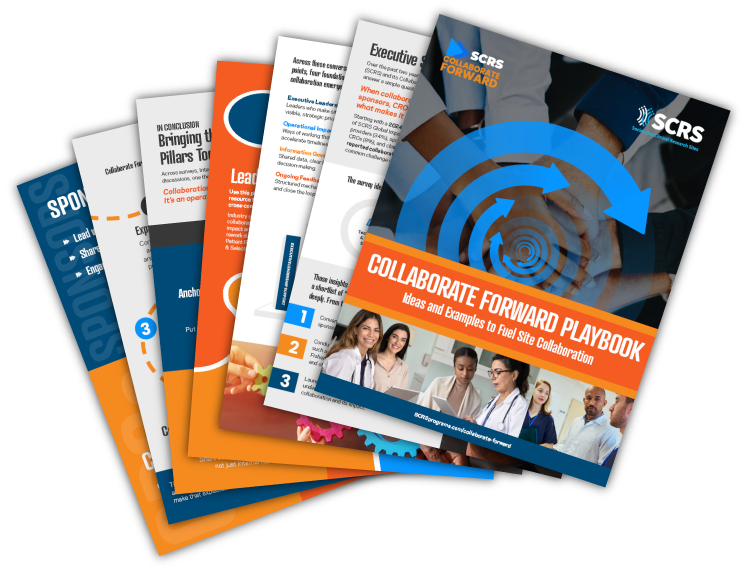
Download the Collaborate Forward Playbook to explore practical examples and tools that your organization can implement to improve study performance.
What You’ll Learn
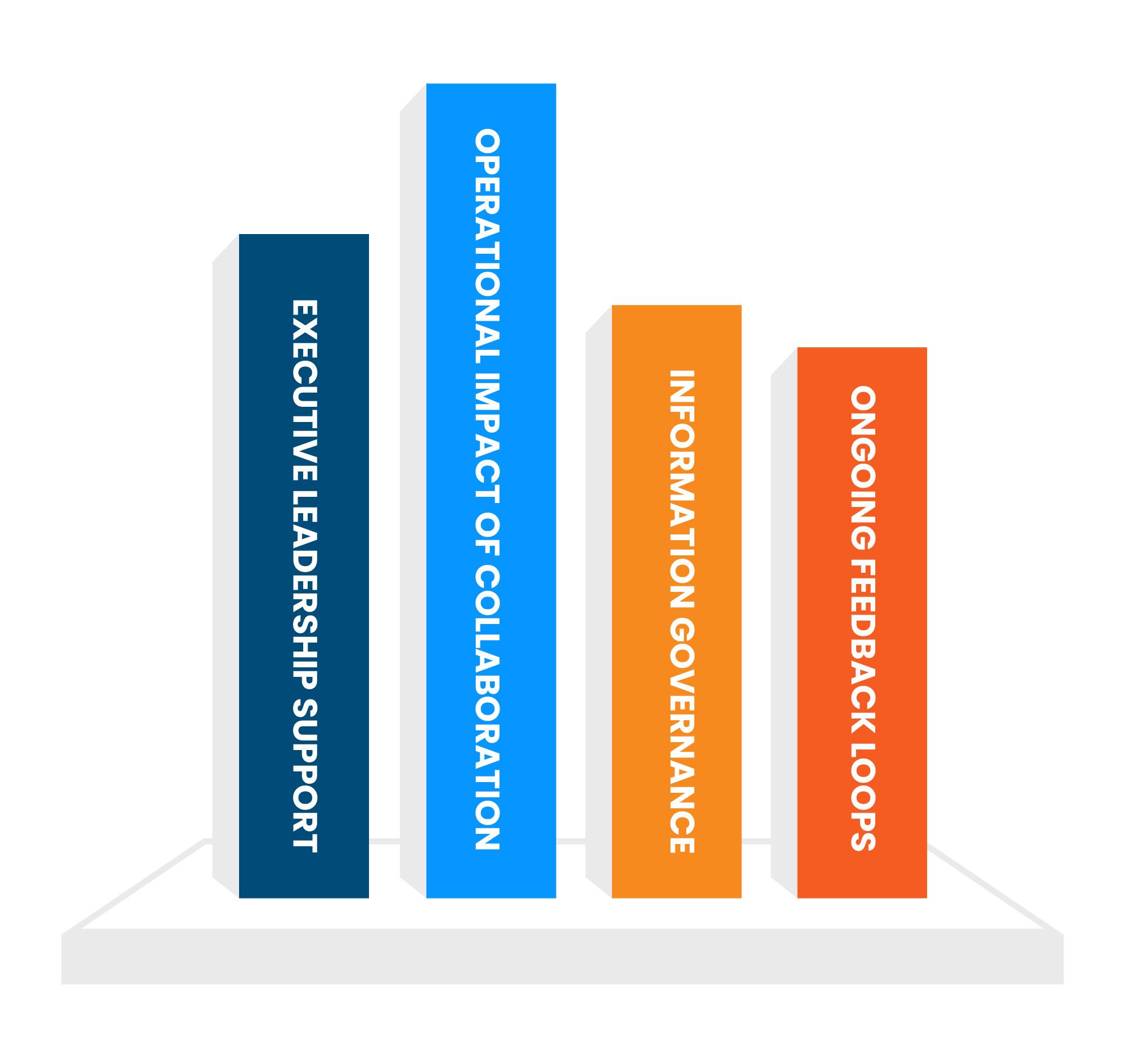
This playbook introduces four pillars that help organizations operationalize collaboration:
Executive Leadership Support
Making site-centric collaboration a visible strategic priority
Operational Impact of Collaboration
Designing processes that reduce friction and accelerate timelines
Information Governance
Creating shared data, metrics, and transparency across partners.
Ongoing Feedback Loops
Capturing and acting on feedback from sites and stakeholders.
SCRS Collaborate Forward InterVIEWS
Turning Site Feedback Into Action: How AbbVie is Turning Real-World Site Experience Into Better-Informed Study Design
For AbbVie, site engagement is not a supporting activity within clinical research —it is central to how they build strong partnerships, strengthen study execution, and help bring new treatment options to patients. Sites are
Designing Trials With Sites, Not Just for Them: How AbbVie is Turning Real-World Site Experience Into Better-Informed Study Design
Clinical trials are built long before the first patient is enrolled. Protocol requirements are established, feasibility is assessed, processes are developed, and patient-facing materials are created. But decisions made early in that process ultimately
Simplify the Work. Lead the Science. How Johnson & Johnson Turned Site Feedback into Scalable Innovation
For years, clinical research has struggled with a familiar problem: information entered into the electronic health record often must be manually entered again for research purposes. The resulting duplication creates unnecessary work for sites
Listening That Leads to Results: How Roche Turned Site Feedback into Stronger Partnerships and Faster Study Start-Up
For years, sponsors have focused on becoming more “site centric.” Yet for many organizations, that still means making existing processes a little easier but oftentimes without the direct input of sites. Roche asked a